THE Nigerian oil and gas sector attracted $14.34 million, about N2.87
billion worth foreign investments in the first half, HY1, of 2015, the
National Bureau of Statistics, NBS, has revealed.
The NBS in its Nigerian Capital Importation report for Second
Quarter, Q2, 2015, said this is an appreciation of 347.36 per cent or
$11.133 million or N2.23 billion increase from the $3.205 million (N641
million) recorded in the sector in the second half, HY2, of 2014.
The amount is however 93 per cent lower than the $204.97 million
(N40.99 billion) year on year in 2014, just as there was a sharp decline
in Q2 2015.
According to the report, capital importation into the sector in Q2
2015 stood at $4.86 million, down 48.65 per cent or $4.609 million
(N921.8 million) from the $9.473 million (N1.89 billion) realised in Q1
2015.
Economic predictions
Recall that analysts at Cardinal Stone Partners, had in their
economic outlook for 2015, predicted that the Nigerian oil and gas
sector will be constrained by under-investment and capital flight as a
result of the declining oil prices.
The analysts noted that the low oil price brought about a number of
negative consequences, putting the naira under pressure due to rapid
capital flight, which triggered scepticism among foreign investors due
to concerns about the implications of declining oil prices for Nigeria,
an oil-dependent country.
Also, analysts at PriceWaterHouseCoopers in their economic analysis
for Nigeria and Africa, declared that areas where limited infrastructure
is currently in place are also likely to suffer due to the paucity of
investment inflow into the sector.
The analysts said: “This is because external investment is needed to
develop the requisite infrastructure – investment that will be difficult
to procure to produce a commodity that is currently losing in value. In
these areas, development of existing discoveries may end up on ice
unless there is a domestic need for the resource.”
Economic uncertainty: Continuing, the NBS noted that at $2.666
billion, the value of capital imported into Nigeria in Q2 2015 is a
marginal drop of $5.24 million or just 0.20 per cent quarter on quarter.
“Capital importation thus remained relatively unchanged from the
$2.67 billion recorded in the opening quarter of 2015, suggesting that
this new lower level will be maintained as long as an uncertain economic
environment remains.“Year on year, second quarter capital imported was
$3.137 billion or 54.06 per cent lower than the $5.803 billion imported
in quarter two of 2014,” the report said.
Broken further the NBS said portfolio investment remained the largest of
all investment types, totaling $2.183 billion in Q2 2015 or 81.88 per
cent of all capital imported. This is $322.50 million or 17.33 per cent
higher than the $1.861 billion recorded in Q1 2015, which was 69.65 per
cent of the total.
However, the report said year on year the decline remained large at $2.734 billion or 55.60 per cent.
The report said: “Within portfolio investment, the key driver of the
quarterly growth observed was Equity, which at 84.56 per cent of
portfolio investment, increased by $706.70 million or 62.02 per cent
from the preceding quarter.
Tuesday, 22 September 2015

Appointments: Buhari doesn’t want to be stabbed like Jonathan — Ebigwei on September 22, 2015
Dr. Sylvan Olisanye Ebigwei (MON), consultant dental
surgeon, is President-Emeritus, Aka Ikenga, the Igbo socio-political
organisation. In this interview, he says the Igbo’s vote for former
President Goodluck Jonathan was calculated to unite the former Eastern
Region. He wants MASSOB to change its name to be relevant. He also spoke
on other national issues. Excerpts:
By Tony Nwankwo
The North wanted power and they now have it. What is your take on that?
Nigeria is too complex for one section to usurp all that the country has without reaction. Nigeria today is not the Nigeria of yesterday. There is a level you can pursue a man, the man will stop and start pursuing you. So, whatever the North wants today, if they want Nigeria to be one, they must make sure that there is equilibrium in governance and appointments in critical areas.
Already, there is disequilibrium in what is happening today and we cannot hide the fact. And that was why the South-South met last week. The President is from the North, the Chief Judge is from the North, the Senate President is from the North, the Speaker of the House of Representatives is from the North. This cannot go on because people will react. So, if the Northerners think they can do this and get away with it, Nigerians will react.
Period of honeymoon
Right now, I can say the period we are in now is a period of honeymoon for Buhari. By the time he sets up his government, people will start looking into critical areas.
Buhari government has been described as government of probes. How far can be go?
If you want to probe, probe everybody, because Jonathan merely ruled this country for five years or thereabout. By the time he came in, Nigeria was in tatters Nothing was functioning. The roads were not there, power was not there, people were just stealing money anyhow. All these stealing did not start during the Jonathan era. Jonathan came in and met a rotten Nigeria. Where was he to start from? It was the people, who destroyed this country that surrounded him. Cleaning up Nigeria was an enormous task. Even those arrested for corruption, how many were jailed? EFCC will make a lot of noise, take suspects to court and that’s the last we hear because the judiciary itself was not helping matters. Had it been we had a strong judiciary, people would sit up. But when people steal, they say, okay, this is my own, this is for law enforcement, the other one is for the judiciary. With that mindset, people started acting with impunity because they know that criminals are not being visited with adequate punishment. That was the reason Jonathan did not succeed.
A cursory look around shows some parastatals like NEPA suddenly come to life. We know Buhari government has not awarded any contract yet. What happened?
People are wondering what is happening. It shows how evil and how rotten people have gotten in this country. Buhari government is not in place, it has not run any budget, he has not spent a dime in re-positioning PHCN, but look at us today. In my office, I have been enjoying uninterrupted power supply for nearly three weeks now, thereby saving money to feed my family. What it portrays is that during Jonathan’s administration, no matter how Jonathan tried, he was being sabotaged.
Power generation
Men of evil abound in this country. And because of this sabotage, despite all the billions of dollars poured into power generation, the power is there, gas is there, but evil people refused that the country should work. But they know what they are gaining. It shows complete sabotage. And these are the people, the present administration should fish out. If they did it to sabotage Jonathan, they can still do it to sabotage the government of Buhari.
Looking critically at Buhari’s appointments so far, people say he is side-tracking the Igbo. How do you view this?
 Buhari is being afraid of what happened to Jonathan. If I am in
Buhari’s shoes, I will not appoint people who will betray me. Because
Nigeria today is not like Nigeria of yesterday. People are no more
honest. The value system of the average Nigerian is poor. We don’t trust
people. Critical appointments have not been made. The appointments he
is making are of domestic issues, people who will surround him. You
don’t get people who will stab you at the back and put them to follow
you. No. Jonathan did that and they stabbed him. That was why he got
angry and told them he had had enough. That was why he threw in the
towel even before they finished counting the votes. Because he
discovered that he was totally betrayed. So, Buhari knew what happened
to Jonathan, he would not want it to happen to him.
Buhari is being afraid of what happened to Jonathan. If I am in
Buhari’s shoes, I will not appoint people who will betray me. Because
Nigeria today is not like Nigeria of yesterday. People are no more
honest. The value system of the average Nigerian is poor. We don’t trust
people. Critical appointments have not been made. The appointments he
is making are of domestic issues, people who will surround him. You
don’t get people who will stab you at the back and put them to follow
you. No. Jonathan did that and they stabbed him. That was why he got
angry and told them he had had enough. That was why he threw in the
towel even before they finished counting the votes. Because he
discovered that he was totally betrayed. So, Buhari knew what happened
to Jonathan, he would not want it to happen to him.
MASSOB is being threatened everywhere. What is their undoing?
As President of Aka Ikenga, I told MASSOB that there is no need for a man to run a good race but outside the track. Igbo man is being marginalised, we know that. But when you want to fight for your rights, you must find a decent way to do it, so that you can have the sympathy of all.
Many of us do not believe in the disintegration of this country. I told them then that there is no other country they can fit in except in Nigeria. I told them, this agitation you are doing, find another name and put on it. You will have the sympathy of everyone in Igbo land because without pressure we cannot get what we want in this country. Change the name MASSOB. What is in a name? Find another name, continue with your agitation, so that you can have followership among Ndigbo. No Igbo man wants to get separated from this country.
You are President Emeritus of Aka Ikenga. We hear there is an agenda to unite the Igbo from all the Igbo speaking South. What impact can this have?
As President of Aka Ikenga, our mind set then for supporting Jonathan was to use his platform to extend true hands of fellowship towards the old constituents of the old Eastern Region. Aftermath of the civil war, the core Igbo became almost a pariah to their brothers and sisters of old Eastern Nigeria, as well as the Ikweres in Rivers and the Anioma people in Delta State. What we did was to show solidarity with the Ijaws so that in future the Ijaw man will know that when they had a problem, in their hour of need, the core Igbo man came to his aid. That was our mindset.
So whatever transpired, whether he ruled well or did not rule well it has worked, because you can now hear the South-South are meeting with the South East, etc. As recent as last week, there was a meeting of the whole of Southern Region of Nigeria to look into their common interest in the present dispensation.
And they came out with a communiqué, advising the President what to do and the negative aspect of his administration so far. So that solidarity is working, that unity is working, that brotherhood is working.
Are you saying the Igbo have no regret over how they voted at the last elections?
Yes, the Igbo have no regrets. Some people are saying the Igbo lost, No. To us, the Igbo didn’t lose because the mindset of supporting Jonathan is different from the mindset of quite a lot of people. Igbo didn’t lose under Jonathan, they had a fair share of governance.
Fair share of governance
The only problem was that many government appointees of Igbo extraction were selfish. They did not empower their own people. Look at the North, the express rail between Kaduna and Abuja, that will open up the whole area and bring Kaduna and adjoining states nearer to the seat of power. Roads were constructed in the North. Look at the Almajiri schools. Nobody ever thought the almajiris should go to school. These are all the handiwork of Jonathan. Look at the Abuja Airport, Kaduna Airport, not to talk of Murtala Mohammed Airport. They have all been elevated and modernized. A lot was achieved. Anyim Pius Anyim was SGF, and that was a powerful position. You can use the position to build up capacity for your own people. So, you cannot blame Jonathan if those he put in power could not use such positions to better their own people.
I passed through Asaba bridge, I see that work is going on at the second Niger Bridge. Before now, it was all rhetoric. During the Obasanjo era, it was all rhetoric, but now you can see that something is being done.
By Tony Nwankwo
The North wanted power and they now have it. What is your take on that?
Nigeria is too complex for one section to usurp all that the country has without reaction. Nigeria today is not the Nigeria of yesterday. There is a level you can pursue a man, the man will stop and start pursuing you. So, whatever the North wants today, if they want Nigeria to be one, they must make sure that there is equilibrium in governance and appointments in critical areas.
Already, there is disequilibrium in what is happening today and we cannot hide the fact. And that was why the South-South met last week. The President is from the North, the Chief Judge is from the North, the Senate President is from the North, the Speaker of the House of Representatives is from the North. This cannot go on because people will react. So, if the Northerners think they can do this and get away with it, Nigerians will react.
Period of honeymoon
Right now, I can say the period we are in now is a period of honeymoon for Buhari. By the time he sets up his government, people will start looking into critical areas.
Buhari government has been described as government of probes. How far can be go?
If you want to probe, probe everybody, because Jonathan merely ruled this country for five years or thereabout. By the time he came in, Nigeria was in tatters Nothing was functioning. The roads were not there, power was not there, people were just stealing money anyhow. All these stealing did not start during the Jonathan era. Jonathan came in and met a rotten Nigeria. Where was he to start from? It was the people, who destroyed this country that surrounded him. Cleaning up Nigeria was an enormous task. Even those arrested for corruption, how many were jailed? EFCC will make a lot of noise, take suspects to court and that’s the last we hear because the judiciary itself was not helping matters. Had it been we had a strong judiciary, people would sit up. But when people steal, they say, okay, this is my own, this is for law enforcement, the other one is for the judiciary. With that mindset, people started acting with impunity because they know that criminals are not being visited with adequate punishment. That was the reason Jonathan did not succeed.
A cursory look around shows some parastatals like NEPA suddenly come to life. We know Buhari government has not awarded any contract yet. What happened?
People are wondering what is happening. It shows how evil and how rotten people have gotten in this country. Buhari government is not in place, it has not run any budget, he has not spent a dime in re-positioning PHCN, but look at us today. In my office, I have been enjoying uninterrupted power supply for nearly three weeks now, thereby saving money to feed my family. What it portrays is that during Jonathan’s administration, no matter how Jonathan tried, he was being sabotaged.
Power generation
Men of evil abound in this country. And because of this sabotage, despite all the billions of dollars poured into power generation, the power is there, gas is there, but evil people refused that the country should work. But they know what they are gaining. It shows complete sabotage. And these are the people, the present administration should fish out. If they did it to sabotage Jonathan, they can still do it to sabotage the government of Buhari.
Looking critically at Buhari’s appointments so far, people say he is side-tracking the Igbo. How do you view this?
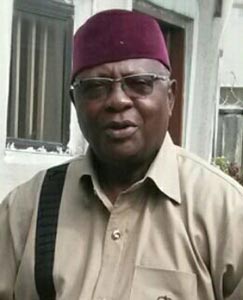
Ebigwei
MASSOB is being threatened everywhere. What is their undoing?
As President of Aka Ikenga, I told MASSOB that there is no need for a man to run a good race but outside the track. Igbo man is being marginalised, we know that. But when you want to fight for your rights, you must find a decent way to do it, so that you can have the sympathy of all.
Many of us do not believe in the disintegration of this country. I told them then that there is no other country they can fit in except in Nigeria. I told them, this agitation you are doing, find another name and put on it. You will have the sympathy of everyone in Igbo land because without pressure we cannot get what we want in this country. Change the name MASSOB. What is in a name? Find another name, continue with your agitation, so that you can have followership among Ndigbo. No Igbo man wants to get separated from this country.
You are President Emeritus of Aka Ikenga. We hear there is an agenda to unite the Igbo from all the Igbo speaking South. What impact can this have?
As President of Aka Ikenga, our mind set then for supporting Jonathan was to use his platform to extend true hands of fellowship towards the old constituents of the old Eastern Region. Aftermath of the civil war, the core Igbo became almost a pariah to their brothers and sisters of old Eastern Nigeria, as well as the Ikweres in Rivers and the Anioma people in Delta State. What we did was to show solidarity with the Ijaws so that in future the Ijaw man will know that when they had a problem, in their hour of need, the core Igbo man came to his aid. That was our mindset.
So whatever transpired, whether he ruled well or did not rule well it has worked, because you can now hear the South-South are meeting with the South East, etc. As recent as last week, there was a meeting of the whole of Southern Region of Nigeria to look into their common interest in the present dispensation.
And they came out with a communiqué, advising the President what to do and the negative aspect of his administration so far. So that solidarity is working, that unity is working, that brotherhood is working.
Are you saying the Igbo have no regret over how they voted at the last elections?
Yes, the Igbo have no regrets. Some people are saying the Igbo lost, No. To us, the Igbo didn’t lose because the mindset of supporting Jonathan is different from the mindset of quite a lot of people. Igbo didn’t lose under Jonathan, they had a fair share of governance.
Fair share of governance
The only problem was that many government appointees of Igbo extraction were selfish. They did not empower their own people. Look at the North, the express rail between Kaduna and Abuja, that will open up the whole area and bring Kaduna and adjoining states nearer to the seat of power. Roads were constructed in the North. Look at the Almajiri schools. Nobody ever thought the almajiris should go to school. These are all the handiwork of Jonathan. Look at the Abuja Airport, Kaduna Airport, not to talk of Murtala Mohammed Airport. They have all been elevated and modernized. A lot was achieved. Anyim Pius Anyim was SGF, and that was a powerful position. You can use the position to build up capacity for your own people. So, you cannot blame Jonathan if those he put in power could not use such positions to better their own people.
I passed through Asaba bridge, I see that work is going on at the second Niger Bridge. Before now, it was all rhetoric. During the Obasanjo era, it was all rhetoric, but now you can see that something is being done.
CJN to judges: Be stringent with corruption cases on September 22, 2015
ABUJA—The Chief Justice of Nigeria,
CJN, Justice Mahmud Mohammed, yesterday, tasked judges to be more
stringent while presiding over corruption-related cases.
 He said there was need for all judges to expedite the determination
of corruption cases using the 2013 Practice Directions on Serious
Crimes, which he said was specially enacted to address delays in the
hearing and determination of such cases.
He said there was need for all judges to expedite the determination
of corruption cases using the 2013 Practice Directions on Serious
Crimes, which he said was specially enacted to address delays in the
hearing and determination of such cases.
He said: “Where justice is prompt, just and based on the law, there are fewer chances for the public to ascribe corruption to our courts.”
Justice Mohammed spoke at a special session of the Supreme Court to mark the commencement of the 2015/2016 legal year and swea-ring in of 21 senior lawyers, who were recently conferred with the rank of Senior Advocates of Nigeria, SAN.
He said: “Permit me to reflect on the activity of the past one year as a necessary pathway into the policy of this court in the year to come.
“I make bold to say that the 2014-2015 legal year was unique in the history and life of our nation’s judiciary as a whole, and the Supreme Court of Nigeria in particular.
“In my considered opinion, the judiciary was largely successful in effectively responding to the challenges it faced in arduously protecting its impartiality and independence.”
Vice President Yemi Osibanjo, Governor Rauf Aregbesola of Osun State and President, Pan African Laywers Union, Mr. Elijah Banda were among dignitaries at the event.
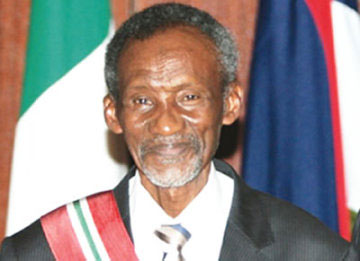
Justice Mahmud Mohammed
He said: “Where justice is prompt, just and based on the law, there are fewer chances for the public to ascribe corruption to our courts.”
Justice Mohammed spoke at a special session of the Supreme Court to mark the commencement of the 2015/2016 legal year and swea-ring in of 21 senior lawyers, who were recently conferred with the rank of Senior Advocates of Nigeria, SAN.
He said: “Permit me to reflect on the activity of the past one year as a necessary pathway into the policy of this court in the year to come.
“I make bold to say that the 2014-2015 legal year was unique in the history and life of our nation’s judiciary as a whole, and the Supreme Court of Nigeria in particular.
“In my considered opinion, the judiciary was largely successful in effectively responding to the challenges it faced in arduously protecting its impartiality and independence.”
Vice President Yemi Osibanjo, Governor Rauf Aregbesola of Osun State and President, Pan African Laywers Union, Mr. Elijah Banda were among dignitaries at the event.
Commissioner–nominees, others to write aptitude test on September 22, 2015
Nominees for appointments as
commissioners in Cross River State are to undergo mandatory integrity
and aptitude test, even as the state governor, Prof. Ben Ayade, has
already set up a selection committee to oversee the process.
A statement by the Special Assistant on Media and Chief Press Secretary, CPS, to the Governor, Mr. Christian Ita, said the nominees would have to undergo the aptitude test before their names would be forwarded to the state House of Assembly for confirmation.
The statement disclosed that appointment of chairmen and members of boards, agencies and parastatals and even special advisers would go through the same routine.
“Governor Ayade wants all nominees for appointments as commissioners to undergo integrity test. They will also write an aptitude test,” the statement said
According to the statement, the governor believes that every would-be appointee in the state must be subjected to ethical measurement to ascertain whether or not they can function in the new order, where accountability and transparency are the watchwords.
Consequently, the governor has set up a selection committee to oversee the process.
According to the statement “Renowned Abuja-based lawyer, Mr. Paul Erokoro, is the chairman of the committee which has prominent woman leader and politician, Mrs. Grace Ekanem and Chief of Staff to the Governor, Mr. Martin Orim as members.”
In another development, Governor Ayade has terminated the contract for the evacuation of refuse in Calabar.
This follows the inability of the contracted firms, PATSON and PACLISON to evacuate refuse from the streets of Calabar.
It will be recalled that during a tour of the metropolis shortly after assuming office, Governor Ayade had given the contractors a three-month ultimatum to improve on the sanitary condition of the metropolis with a view to restoring its rightful status as the cleanest and greenest state in the country.
A statement by the Special Assistant on Media and Chief Press Secretary, CPS, to the Governor, Mr. Christian Ita, said the nominees would have to undergo the aptitude test before their names would be forwarded to the state House of Assembly for confirmation.
The statement disclosed that appointment of chairmen and members of boards, agencies and parastatals and even special advisers would go through the same routine.
“Governor Ayade wants all nominees for appointments as commissioners to undergo integrity test. They will also write an aptitude test,” the statement said
According to the statement, the governor believes that every would-be appointee in the state must be subjected to ethical measurement to ascertain whether or not they can function in the new order, where accountability and transparency are the watchwords.
Consequently, the governor has set up a selection committee to oversee the process.
According to the statement “Renowned Abuja-based lawyer, Mr. Paul Erokoro, is the chairman of the committee which has prominent woman leader and politician, Mrs. Grace Ekanem and Chief of Staff to the Governor, Mr. Martin Orim as members.”
In another development, Governor Ayade has terminated the contract for the evacuation of refuse in Calabar.
This follows the inability of the contracted firms, PATSON and PACLISON to evacuate refuse from the streets of Calabar.
It will be recalled that during a tour of the metropolis shortly after assuming office, Governor Ayade had given the contractors a three-month ultimatum to improve on the sanitary condition of the metropolis with a view to restoring its rightful status as the cleanest and greenest state in the country.
Army approves promotion for 5,000 soldiers fighting Boko Haram on September 22, 2015
Abuja—The Nigeria Army has approved
the promotion of 5,000 soldiers fighting insurgents in the North-East
and others involved in other operations, as part of steps to boost their
morale.
 The Chief of Army Staff, Lt.-Gen. Tukur Buratai, made the
announcement yesterday in Abuja, at the opening of the 2015 Chief of
Army Staff Third Quarter conference at Army Headquarters.
The Chief of Army Staff, Lt.-Gen. Tukur Buratai, made the
announcement yesterday in Abuja, at the opening of the 2015 Chief of
Army Staff Third Quarter conference at Army Headquarters.
He said that the approval of the promotion of the soldiers was one of the many measures introduced by the Army under his command to boost troops’ morale and reposition its operations.
He added that it was also in line with the vision of the Army command to reward gallant troops in any way deemed fit to boost their combat readiness and willingness to serve fatherland.
He said that troops serving in the North-East and in other operations in the country would regularly receive rewards from the Army High Command for their selfless service to the nation.
Lt.-Gen. Buratai said: “Since we came on board, we have introduced several measures aimed at encouraging our troops to give their best in the service of their nation.
“The approval of the accelerated promotion of 5,000 soldiers was to redeem the promise made by my predecessor to the troops fighting insurgents in the North-East.
“It is my belief that this promotion, coupled with other incentives, will encourage our troops to fight for our country.”
The COAS charged the officers and all personnel of the Nigeria Army to constantly maintain the required level of physical fitness.
He gave all Army officers and soldiers a December 15 deadline to shape up or face the medical board for appropriate disciplinary actions.
Buratai said under his watch, the Army had recorded major successes in fighting insurgency, improving its human rights credentials and troops’ welfare.
He said that his vision of entrenching professionalism and bequeathing a combat-ready Army to the nation was on course as commanders and troops had been fully briefed to key into the vision.
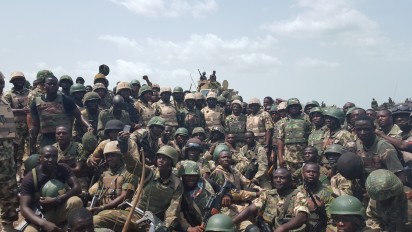
Army
He said that the approval of the promotion of the soldiers was one of the many measures introduced by the Army under his command to boost troops’ morale and reposition its operations.
He added that it was also in line with the vision of the Army command to reward gallant troops in any way deemed fit to boost their combat readiness and willingness to serve fatherland.
He said that troops serving in the North-East and in other operations in the country would regularly receive rewards from the Army High Command for their selfless service to the nation.
Lt.-Gen. Buratai said: “Since we came on board, we have introduced several measures aimed at encouraging our troops to give their best in the service of their nation.
“The approval of the accelerated promotion of 5,000 soldiers was to redeem the promise made by my predecessor to the troops fighting insurgents in the North-East.
“It is my belief that this promotion, coupled with other incentives, will encourage our troops to fight for our country.”
The COAS charged the officers and all personnel of the Nigeria Army to constantly maintain the required level of physical fitness.
He gave all Army officers and soldiers a December 15 deadline to shape up or face the medical board for appropriate disciplinary actions.
Buratai said under his watch, the Army had recorded major successes in fighting insurgency, improving its human rights credentials and troops’ welfare.
He said that his vision of entrenching professionalism and bequeathing a combat-ready Army to the nation was on course as commanders and troops had been fully briefed to key into the vision.
How 20 Nigerians died in Mecca on September 22, 2015
The National Hajj Commission of
Nigeria, NAHCON, yesterday, confirmed the death of 20 Nigerian pilgrims
in Saudi Arabia during this year’s Hajj.
 Chairman of the commission, Abdullahi Mukhtar, disclosed this at a pre-Arafat meeting in Jeddah, Saudi Arabia.
He said 14 pilgrims died from cardiac arrest and other ailments, while six lost their lives in the September 11 crane crash incident.
Mukhtar said three Nigerians were injured at the September 11 crane crash, as against the six earlier reported.
He said all the pilgrims that submitted valid documents to the commission for visa were airlifted to Saudi Arabia for the pilgrimage.
He also said that the security situation in Saudi Arabia was tight and advised pilgrims to be orderly and to stay in Makkah.
Mr. Mukhtar also advised the pilgrims to drink more water due to the harsh weather, adding that they should only expose themselves to the sun when necessary.
He said female pilgrims should move in groups and avoid construction sites within the Grand Mosque and outside.
On Arafat, he said the pilgrims would start moving to Mina at midnight and advised them against climbing the roof of the buses conveying them.
“We have resolved at a meeting with clerics to abide by the time given to us by the Saudi authorities to start moving to Mina,” he said.
He warned clerics against inciting pilgrims against the resolution, adding that anyone found doing so would be sanctioned.
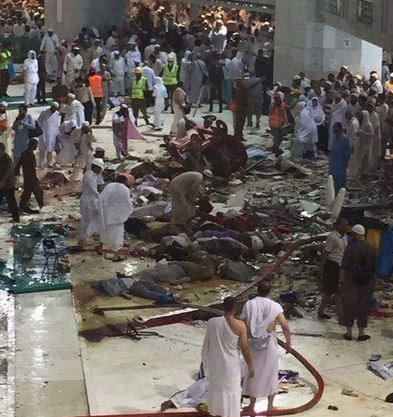 Chairman of the commission, Abdullahi Mukhtar, disclosed this at a pre-Arafat meeting in Jeddah, Saudi Arabia.
He said 14 pilgrims died from cardiac arrest and other ailments, while six lost their lives in the September 11 crane crash incident.
Mukhtar said three Nigerians were injured at the September 11 crane crash, as against the six earlier reported.
He said all the pilgrims that submitted valid documents to the commission for visa were airlifted to Saudi Arabia for the pilgrimage.
He also said that the security situation in Saudi Arabia was tight and advised pilgrims to be orderly and to stay in Makkah.
Mr. Mukhtar also advised the pilgrims to drink more water due to the harsh weather, adding that they should only expose themselves to the sun when necessary.
He said female pilgrims should move in groups and avoid construction sites within the Grand Mosque and outside.
On Arafat, he said the pilgrims would start moving to Mina at midnight and advised them against climbing the roof of the buses conveying them.
“We have resolved at a meeting with clerics to abide by the time given to us by the Saudi authorities to start moving to Mina,” he said.
He warned clerics against inciting pilgrims against the resolution, adding that anyone found doing so would be sanctioned.
Robbers raid Catholic Church in Abuja on September 22, 2015 /
ABUJA—Barely three months after the
Catholic Church of Annunciation, Kubwa, was upgraded as a Parish by the
Archdiocese of Abuja, suspected armed robbers stormed it and carted
away valuable equipment and a Toyota Camry.
The robbers, who have kept Kubwa residents in persistent fear, especially at Arab road, Omega Paints Street and Sunrise Street, forced their way into compounds to carry out their nefarious activities.
According to the Parish Priest, Rev. Fr. Matthew Kwaggas, the robbers stormed the parish after Sunday’s service and removed most of the things used for thanksgiving, including bags of rice and drinks.
He also told the congregation during Mass that about two weeks after the first raid of the church, the robbers again broke in through one of the windows and removed all the public address systems, a Toyota Camry and musical instruments.
The robbers, who have kept Kubwa residents in persistent fear, especially at Arab road, Omega Paints Street and Sunrise Street, forced their way into compounds to carry out their nefarious activities.
According to the Parish Priest, Rev. Fr. Matthew Kwaggas, the robbers stormed the parish after Sunday’s service and removed most of the things used for thanksgiving, including bags of rice and drinks.
He also told the congregation during Mass that about two weeks after the first raid of the church, the robbers again broke in through one of the windows and removed all the public address systems, a Toyota Camry and musical instruments.
Monday, 21 September 2015
Pioli laments 'ugly' Lazio
Lazio coach Stefano Pioli has criticised his team's "ugly"
performance after they were trounced 5-0 by Napoli in an astonishing
Serie A clash on Soccer

Lazio coach Stefano Pioli has criticised his
team's "ugly" performance after they were trounced 5-0 by Napoli in an
astonishing Serie A clash on Sunday.
The capital club finished third in the table last season, but have made a poor start to the new campaign after failing to progress through Champions League qualifying and losing two of their first four league games.
They suffered a humiliating loss in Naples, with former Real Madrid striker Gonazlo Higuain scoring twice to help the home side to a stunning result.
"It is not enough just to put this night behind us," Pioli told Mediaset Premium. "Napoli played at a superior level.
"We are not the side that took the field, even though we failed in nearly every regard. It was not the real Lazio.
"It is only right that we analyse this match and try to quickly move on as we have another game on Wednesday. It is an ugly defeat.
"There was too much space between each player on the field and we made mistakes when trying to push forward.
"We may have struggled due to the away game in the Europa League. Napoli also played on Thursday, although they were at home.
"These are not the type of performances we should be producing - this display is far from what we are capable of. It is a massive step backwards."
Lazio host Genoa on Wednesday as they look to put the harrowing defeat behind them.
The capital club finished third in the table last season, but have made a poor start to the new campaign after failing to progress through Champions League qualifying and losing two of their first four league games.
They suffered a humiliating loss in Naples, with former Real Madrid striker Gonazlo Higuain scoring twice to help the home side to a stunning result.
"It is not enough just to put this night behind us," Pioli told Mediaset Premium. "Napoli played at a superior level.
"We are not the side that took the field, even though we failed in nearly every regard. It was not the real Lazio.
"It is only right that we analyse this match and try to quickly move on as we have another game on Wednesday. It is an ugly defeat.
"There was too much space between each player on the field and we made mistakes when trying to push forward.
"We may have struggled due to the away game in the Europa League. Napoli also played on Thursday, although they were at home.
"These are not the type of performances we should be producing - this display is far from what we are capable of. It is a massive step backwards."
Lazio host Genoa on Wednesday as they look to put the harrowing defeat behind them.
Eibar 0 Atletico Madrid 2
Substitutes Angel Correa and Fernando Torres combined to give Atletico Madrid a 2-0 win over

Super-subs Fernando Torres and Angel Correa struck to give Atletico Madrid a 2-0 win away to Eibar on Saturday.
Diego
Simeone's side missed a handful of chances in the first half, with
Jackson Martinez particularly wasteful, but Correa's fine finish just a
minute after coming on gave them the lead.
The
home side battled for a way back into the match, but Torres, who was
introduced at half-time, clipped a deft finish into the far corner
following Correa's pass to secure the victory and send Atletico to
within a point of La Liga leaders Real Madrid.
Luciano
Vietto, starting in the three-pronged attack alongside Jackson and
Antoine Griezmann, brought the first save out of Asier Riesgo with a low
shot from distance.
Griezmann's corner was headed
towards the bottom corner of the net by Jose Maria Gimenez, but his
effort was blocked and Eibar were able to clear, before Jackson's placed
effort from inside the box was well saved by Riesgo.
Eibar
looked dangerous on the break and Saul Berjon tested Jan Oblak from one
quick breakaway before Atletico spurned their first clear-cut chance of
the half. Koke's flighted ball was turned back across goal by Jackson,
but Vietto failed to connect properly at the far post with the goal at
his mercy and he managed only to ripple the side-netting.
Filipe
Luis was bailed out by Gimenez's headed clearance after he totally
misjudged a long ball up to Keko, and Jackson was denied by a smart
block from Ander Capa following Griezmann's clever reverse pass.
The
Colombian was inches away from connecting with the lively Griezmann's
fizzed cross and Vietto saw a header comfortably held as Atleti began to
take control towards the end of the half.
Fernando
Torres and Oliver Torres replaced Jackson and Vietto at the break, but
it was Filipe Luis who came close to breaking the deadlock, Riesgo
diving superbly to claw his deflected strike from distance behind for a
corner.
Oblak was called into action to deny
Berjon at the near post a few moments later and the stop proved pivotal
as Atleti took the lead just past the hour mark.
Torres
battled to win a hopeful ball over the top and he teed up Correa, who
dummied superbly before firing past Riesgo from inside the area for his
first goal for the club - and all just a minute after being brought on
for Koke.
Oliver dragged a shot wide after some
fine footwork as Atleti pushed for a second, but Oblak was called into
action to deny Sergi Enrich following a long ball upfield.
Atleti
doubled their advantage after 77 minutes. Correa turned provider with a
clever throughball to Torres, who chipped it over the onrushing Riesgo
and into the far corner.
Eibar pushed for a late
foothold and Juanfran almost gifted it to them, heading past Oblak
before scrambling to clear the ball off the goal-line, but Atletico held
firm for three points.
Mathieu Valbuena 'reacted well' to Marseille return
Lyon defender Milan Bisevac hailed Mathieu Valbuena for the way the midfielder handled a hostile return to Marseille on Sunday.
Valbuena made his first appearance at Marseille's Stade Velodrome since leaving the south coast club for Dynamo Moscow in August 2014, and the local fans were not happy to see the France international.
Early in the second half, Valbuena delayed taking a corner as objects targeting him were hurled onto the pitch, while just after the hour mark; referee Ruddy Buquet temporarily suspended the match when more missiles were thrown at Lyon goalkeeper Anthony Lopes.
While Lyon coach Hubert Fournier conceded his team did not handle the 15-minute disruption well, Bisevac was impressed by Valbuena's composure.
"Valbuena reacted well," the Serbian central defender told Lyon's website.
"He is a great player with a lot of experience."
Valbuena was targeted on and off the pitch.
Before the match, Marseille fans hung an effigy of the diminutive playmaker, while he was crunched by Marseille's Romain Alessandrini just before half-time, which resulted in the latter being sent off.
But the 30-year-old insisted he remains fond of the club where he played for eight Ligue 1 campaigns.
"I was fine. I took a beating. This is my game," Valbuena said.
"It's weird to play against OM. I know everyone here. It's very special.
"There was a large twinge in my heart. I put all my emotions aside."
After Alexandre Lacazette gave Lyon the lead in the 25th minute after he was awarded a soft penalty, Marseille fans were incensed when the home side's Benjamin Mendy was judged to have dived in the box in the 61st minute.
That prompted scenes that forced Buquet to take the players off the pitch and following the resumption, Marseille equalised thanks to Karim Rekik's header from a 68th-minute corner.
"The second half was complicated. The game has been stopped more than 15 minutes," Fournier said.
"After that, Marseille came back better than us. We were not into the game the first five minutes following the interruption. We gave away the ball and took the risk to be punished."
Marseille coach Michel argued his team played better after Alessandrini's red card but was worried the club's supporters may see the Stade Velodrome empty in the coming weeks.
"I am of course against all situations that could lead us to play in front of an empty stadium because without supporters, football is no longer a show," he told Marseille's website.
"Our supporters are able to help the team. With an empty stadium, it would be difficult. "
Valbuena made his first appearance at Marseille's Stade Velodrome since leaving the south coast club for Dynamo Moscow in August 2014, and the local fans were not happy to see the France international.
Early in the second half, Valbuena delayed taking a corner as objects targeting him were hurled onto the pitch, while just after the hour mark; referee Ruddy Buquet temporarily suspended the match when more missiles were thrown at Lyon goalkeeper Anthony Lopes.
While Lyon coach Hubert Fournier conceded his team did not handle the 15-minute disruption well, Bisevac was impressed by Valbuena's composure.
"Valbuena reacted well," the Serbian central defender told Lyon's website.
"He is a great player with a lot of experience."
Valbuena was targeted on and off the pitch.
Before the match, Marseille fans hung an effigy of the diminutive playmaker, while he was crunched by Marseille's Romain Alessandrini just before half-time, which resulted in the latter being sent off.
But the 30-year-old insisted he remains fond of the club where he played for eight Ligue 1 campaigns.
"I was fine. I took a beating. This is my game," Valbuena said.
"It's weird to play against OM. I know everyone here. It's very special.
"There was a large twinge in my heart. I put all my emotions aside."
After Alexandre Lacazette gave Lyon the lead in the 25th minute after he was awarded a soft penalty, Marseille fans were incensed when the home side's Benjamin Mendy was judged to have dived in the box in the 61st minute.
That prompted scenes that forced Buquet to take the players off the pitch and following the resumption, Marseille equalised thanks to Karim Rekik's header from a 68th-minute corner.
"The second half was complicated. The game has been stopped more than 15 minutes," Fournier said.
"After that, Marseille came back better than us. We were not into the game the first five minutes following the interruption. We gave away the ball and took the risk to be punished."
Marseille coach Michel argued his team played better after Alessandrini's red card but was worried the club's supporters may see the Stade Velodrome empty in the coming weeks.
"I am of course against all situations that could lead us to play in front of an empty stadium because without supporters, football is no longer a show," he told Marseille's website.
"Our supporters are able to help the team. With an empty stadium, it would be difficult. "
Why we partner MTN to disburse MSMEDF to retailers — LAPO on September 21, 2015
Lapo Microfinance Bank, penultimate week, said that it entered into
partnership with MTN with a view to meeting its commitment to Central
Bank of Nigeria (CBN)’s Micro Small and Medium Enterprise Fund (MSMEDF)
The initiative known as ‘MTN BizGrow’ is an SME credit product, primarily designed to meet the funding needs of MTN retailers in partnership with credit organisations , especially, it would enable the telecom giant retailers’ access credit by leveraging on the small and medium enterprise development initiative of the CBN.
In addition, LAPO is the first partner engaged by Mtn to extend loan facility obtained under CBN’s SME development fund program to provide funds to Mtn retailers to boost their sales.
Managing Director/CEO, LAPO MfB, Mr. Godwin Ehigiamusoe, said that the product has a potential to scale up and thereby translating into a superior financial returns, saying, “When the proposal for this project came in, it was very easy for us to decide to be part of it, we see this product helping us to further our mission as an institution to empower the economic factors, particularly at the bottom end of the society, secondly the fact that MTN is a great organization and I do not think that there is any serious institution that would allow a great institution to pass away without grabbing the opportunity.
“Apparently, if you look at it from the business case, this product has a potential to scale up and thereby translating into a superior financial returns. For us it is about pushing our mission and as a foremost microfinance bank in Nigeria, we needed to align with the aspiration of the CBN to ensure that the people operating at the lower cadre of the economy, that is the micro small and medium enterprises have access to finance and therefore we made our clear commitment to MSMEDF.
“We have at the moment accessed N200 million from the fund and we hope that as we recruit more people especially for this product with the MTN, we will be able to go up,” he said.
However, to access the loan, participants must be MTN retailers and must have been in business for a minimum of period of 12 months. The participant in like manner must open account with LAPO and must provide a guarantor, while the loan would be accessed at any LAPO branch in the 28 states in Nigeria.
Loans would be advanced to selected or qualified retailers to tune of a minimum of N50, 000 and maximum of N100, 000 with no tangible collateral required.
The initiative known as ‘MTN BizGrow’ is an SME credit product, primarily designed to meet the funding needs of MTN retailers in partnership with credit organisations , especially, it would enable the telecom giant retailers’ access credit by leveraging on the small and medium enterprise development initiative of the CBN.
In addition, LAPO is the first partner engaged by Mtn to extend loan facility obtained under CBN’s SME development fund program to provide funds to Mtn retailers to boost their sales.
Managing Director/CEO, LAPO MfB, Mr. Godwin Ehigiamusoe, said that the product has a potential to scale up and thereby translating into a superior financial returns, saying, “When the proposal for this project came in, it was very easy for us to decide to be part of it, we see this product helping us to further our mission as an institution to empower the economic factors, particularly at the bottom end of the society, secondly the fact that MTN is a great organization and I do not think that there is any serious institution that would allow a great institution to pass away without grabbing the opportunity.
“Apparently, if you look at it from the business case, this product has a potential to scale up and thereby translating into a superior financial returns. For us it is about pushing our mission and as a foremost microfinance bank in Nigeria, we needed to align with the aspiration of the CBN to ensure that the people operating at the lower cadre of the economy, that is the micro small and medium enterprises have access to finance and therefore we made our clear commitment to MSMEDF.
“We have at the moment accessed N200 million from the fund and we hope that as we recruit more people especially for this product with the MTN, we will be able to go up,” he said.
However, to access the loan, participants must be MTN retailers and must have been in business for a minimum of period of 12 months. The participant in like manner must open account with LAPO and must provide a guarantor, while the loan would be accessed at any LAPO branch in the 28 states in Nigeria.
Loans would be advanced to selected or qualified retailers to tune of a minimum of N50, 000 and maximum of N100, 000 with no tangible collateral required.
Debts: Contractors appeal to FG, states to pay on September 21, 2015
Contractors in the nation’s construction industry have appealed to
federal and state governments to pay debts owed the firms to enable them
to return to project sites across the country. Acting under the
auspices of Federation of Construction Industry (FOCI), the contractors
claimed that in the last two years alone, debt owed them by various
governments was N600 billion.
President of the group, Mr Solomon Ogunbusola, told news men in Abuja that delay in payment of the debt had grounded operations of most of the companies. According to him, many of the companies have closed shops while thousands of workers have been retrenched. Ogunbusola said that no fewer than 8, 000 workers in the industry were laid off in the last six months. He admitted that the governments in the country were currently facing challenges, saying “we appreciate efforts towards paying salaries of civil servants”.
“This is a step in the right direction, but we appeal that government should look into our problem soon as they conclude intervention in the civil service,” he said.
He assured that the group would resist confrontation with government at any level ‘’because we remain partners in progress.”
Ogunbusola said that the association recognised the downturn in the nation’s economy and commended the government for its determination in addressing the situation.
“We will not fight the government or go to the streets with placards, because we remain partners in progress for the development of the country.
“We appreciate the fact that government is grappling with dwindling resources due to shortfall in oil proceeds. So, nobody is expecting the government to pay all the debt at once but we expect some payment to help us offset our liabilities and be able to return to project sites. There is no way a responsible government can overlook the welfare of civil servants and deploy available funds to pay construction companies,” he said. He pledged that the construction sub-sector would continue to partner the government in efforts to develop and maintain infrastructure.
President of the group, Mr Solomon Ogunbusola, told news men in Abuja that delay in payment of the debt had grounded operations of most of the companies. According to him, many of the companies have closed shops while thousands of workers have been retrenched. Ogunbusola said that no fewer than 8, 000 workers in the industry were laid off in the last six months. He admitted that the governments in the country were currently facing challenges, saying “we appreciate efforts towards paying salaries of civil servants”.
“This is a step in the right direction, but we appeal that government should look into our problem soon as they conclude intervention in the civil service,” he said.
He assured that the group would resist confrontation with government at any level ‘’because we remain partners in progress.”
Ogunbusola said that the association recognised the downturn in the nation’s economy and commended the government for its determination in addressing the situation.
“We will not fight the government or go to the streets with placards, because we remain partners in progress for the development of the country.
“We appreciate the fact that government is grappling with dwindling resources due to shortfall in oil proceeds. So, nobody is expecting the government to pay all the debt at once but we expect some payment to help us offset our liabilities and be able to return to project sites. There is no way a responsible government can overlook the welfare of civil servants and deploy available funds to pay construction companies,” he said. He pledged that the construction sub-sector would continue to partner the government in efforts to develop and maintain infrastructure.
Nigeria’s economic growth hasn’t been all-inclusive – NESG boss on September 21, 2015
Mr. Kyari Abba Buka is the Chairman, Nigeria Economic Summit
Group, NESG. In this interview with Vanguard, he spoke on some issues
bedevilling the Nigerian economy, way forward, and activities of the
forthcoming 21st summit slated for Abuja from October 13-15, 2015.
 Excerpts:
What is the objective of this 21ST summit?
The objective or rather let
me start with the theme of the 21st summit. In Nigeria, we’ve been having the summit every year for the last 21 years since the Nigerian Economy Summit, Group was founded. This year’s theme is basically achieving competitiveness, inclusive growth and sustainability.
In economy such as ours, government especially with this new dispensation may indeed make tough choices because the things about the execution of strategy for an enterprise or for a country is that one must have the discipline and determination to say that these are the most important things that we need to pay attention to and we need to execute them. And for Nigeria, we have to be in a hurry to fix some of these issues; we have to be competitive or to be globally competitive and we cannot exonerate ourselves from the rest of the world. We have to pay attention to our infrastructure problem, and when people talk about the infrastructure and investment in infrastructure, it is of course to us the rail , roads, the water , our airport etc.
The infrastructure is all the basic ingredients, that if they are in good running condition, the economy would continue to grow at a faster rate. Now, that of course, requires a lot of money and time to achieve. However, the discussion to be expected in the summit is to pay attention to those aspects of the economy that would be fixing them and will basically catalyse to growth. We have reported that in the past 10 years or so that Nigeria had grown at the average of 7 percent and so on and so forth. But these in my own personal views were not all that inclusive growth. Nobody has kept statistics of that growth whether that growth is commensurate with employment growth, and how it affects the basic lives of the average citizens.
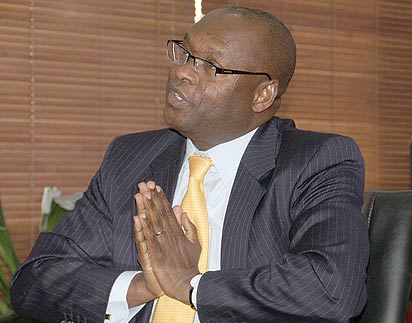
*Kyari
What is the objective of this 21ST summit?
The objective or rather let
me start with the theme of the 21st summit. In Nigeria, we’ve been having the summit every year for the last 21 years since the Nigerian Economy Summit, Group was founded. This year’s theme is basically achieving competitiveness, inclusive growth and sustainability.
In economy such as ours, government especially with this new dispensation may indeed make tough choices because the things about the execution of strategy for an enterprise or for a country is that one must have the discipline and determination to say that these are the most important things that we need to pay attention to and we need to execute them. And for Nigeria, we have to be in a hurry to fix some of these issues; we have to be competitive or to be globally competitive and we cannot exonerate ourselves from the rest of the world. We have to pay attention to our infrastructure problem, and when people talk about the infrastructure and investment in infrastructure, it is of course to us the rail , roads, the water , our airport etc.
The infrastructure is all the basic ingredients, that if they are in good running condition, the economy would continue to grow at a faster rate. Now, that of course, requires a lot of money and time to achieve. However, the discussion to be expected in the summit is to pay attention to those aspects of the economy that would be fixing them and will basically catalyse to growth. We have reported that in the past 10 years or so that Nigeria had grown at the average of 7 percent and so on and so forth. But these in my own personal views were not all that inclusive growth. Nobody has kept statistics of that growth whether that growth is commensurate with employment growth, and how it affects the basic lives of the average citizens.
Buhari says no to Naira devaluation on September 21, 2015
esident Mohamadu Buhari may have, so far, given the clearest preview
of his blueprint for the revival and sustenance of inclusive growth of
the Nigerian economy, in a recent interview with a French media house,
in Paris. Buhari’s observation on the Nigerian currency was that “the
naira has been devalued, as it used to be around N140/$ and now it is
hovering around N200/$ and above”. Consequently, the President cautioned
that “I don’t think it is healthy for us to have the Naira further
devalued”.

Furthermore, PMB explained that, “we are therefore getting the Central Bank to make modifications in terms of foreign exchange availability for essential industries, spare parts, essential raw materials and so on, while liberal access to “CBN’s depleting forex reserves” will be denied to importers of such things like toothpick and rice for which Nigeria has adequate capacity”. The President therefore concluded that “we don’t need to give our hard earned currency for that, but those who insist on toothpick from Europe or from China, instead of using Nigerian toothpick, they can go and source their (own) foreign exchange”.
What is clearly evident from the above narrative, is Buhari’s firm endorsement of the CBN Governor’s recent steps to reduce pressure of dollar demand on ‘CBN’s reserves’ and Naira exchange rate’.
Indeed, PMB’s historical antecedent suggests that he was never enamored by the usually extravagant promises that a weaker naira would jump start or successfully stimulate economic prosperity.
Indeed, Daily Independent Newspaper of 17/9/15 reported that Buhari had recalled at a Town Hall election campaign in Abuja, that “he (Buhari) refused to remove subsidies on petrol and devalue the Naira when he was Head of State (1983-5), because it would destroy the economy”. PMB also revealed that “when we came into power in December 1983, we were approached by the world powers at some stage to devalue the Naira, remove petrol subsidy and remove subsidy on flour, but we refused”. According to Buhari, “the issue was that if we get plenty of Naira, what are we going to do with it? We (had) even stopped farming and the only thing we get money from was oil and that was being paid in dollars”.
In retrospect, however, soon after he was ousted from power, the IMF came calling with a Structural Adjustment Economic Plan which they boasted would chart our course to El Dorado! Regrettably, the succeeding regime of Ibrahim Babangida, ultimately, smuggled in SAP under the guise of a home grown variant which horrifyingly debased the Naira and kick-started the odious brain drain of some of our best human assets to Europe and America and inadvertently triggered the steady descent of our economy and our national values.
Ironically, PMB is back as President, thirty years later, when the Naira exchange rate has alarmingly climbed down from less than N1=$1 in 1985 to N200/$ today; curiously, however, appropriate pricing of Naira and fuel subsidy still remain pivotal issues. There is also, growing international pressure, once again, to further devalue the Naira by between 15-20% i.e. to N230-240=$1, with the carrot of more portfolio investment inflow, despite their fickle disposition.
Nonetheless, President Buhari’s observations in the France 24 interview, may be an early reiteration of his position thirty years ago, that “devaluation would destroy the economy”.
Nevertheless, we need to ask, whether Buhari’s claim of the destructive capacity of devaluation can be substantiated. For this purpose, let us assume, for arithmetic ease, that the dollar appreciates 100% against the naira to exchange for N400=$, even if such rate of appreciation may deceptively appear presently, unrealistic; however, we must remember that the same dollar exchange rate appreciated from 50k=$ to N200=$ between 1975 and 2015, i.e. a 20,000 percent rise despite relatively increasing surplus forex earnings!
In reality, N400=$1 exchange rate will reduce the current minimum wage to less than $50 per month! Thus, the minimum wage earner, may have to work 2X10 hour shifts in a 24 hour day to earn the income required to maintain his old consumption pattern before devaluation! Similarly, all other income earners, including savings, would also lose up to 50% of the value of their incomes; while, all equity in the stock market will be reduced by 50% of their current dollar value if the dollar appreciates to N400=$1.
Incidentally, the inflationary spiral which comes with weaker Naira exchange rates will also reduce consumer demand with adverse consequences on industrial capacity utilisation, fresh direct investment and the already oppressive rate of employment. For example, while the manufacturing sector contributed more than 10% to our gross domestic product in 1986 when the Naira was N2.02=$, regrettably, however, manufacturing barely contributes less than 5% to the GDP; with today’s exchange rate of N200=$1, thus by extrapolation, a N400=$1 exchange rate will inevitably also further weaken the contribution of the industrial subsector well below 5% of GDP.
Furthermore, higher raw material costs will be induced by weaker Naira exchange rates and indisputably make “made in Nigeria” goods uncompetitive and therefore promote Nigeria as an inviting dumping ground for myriad imports.
Similarly, sustainable fiscal plans, will clearly become a challenge if dollar appreciates 100% against the current Naira rate; for example, although the annual budget size may nominally double, but such bloated budgets would barely command less than 50% of their former real values before devaluation.
Incidentally, if the dollar appreciates to N400=$1, our celebrated GDP of about $510bn with N155=$1 exchange rate, would clearly become embarrassingly devalued to just above $200bn.
Worse still, fuel price will also double beyond N200/litre (even with production from local refineries) if N400=$1, while such price hike will surely make the removal of subsidy very unpopular. Instructively, also, if fuel remains subsidized, we may need to dedicate over 20% of our annual budgets to payment of subsidy.
Evidently, from the preceding narrative, President Buhari’s phobia for Naira devaluation may be justified. However, it is difficult to see how further Naira devaluation can be avoided if low crude oil prices deplete dollar inflow while indiscriminate naira liquidity conversely remain uncaged.
The CBN’s recent notice of its intention to mop up over N800bn surplus naira values from the money market before December 2015, therefore, clearly portend potentially dark days for naira exchange rate. Furthermore, the threat from excess liquidity and inflation would similarly propel CBN’s borrowing of billions of Naira that it would simply store away as idle funds, despite the attendant oppressive interest rates of about 12-15% and the crying need of the real sector for cheap funds.
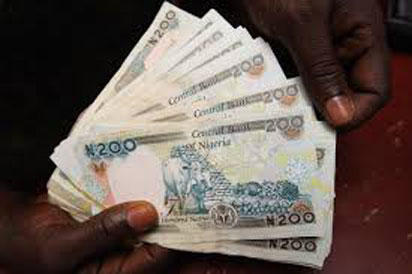
Furthermore, PMB explained that, “we are therefore getting the Central Bank to make modifications in terms of foreign exchange availability for essential industries, spare parts, essential raw materials and so on, while liberal access to “CBN’s depleting forex reserves” will be denied to importers of such things like toothpick and rice for which Nigeria has adequate capacity”. The President therefore concluded that “we don’t need to give our hard earned currency for that, but those who insist on toothpick from Europe or from China, instead of using Nigerian toothpick, they can go and source their (own) foreign exchange”.
What is clearly evident from the above narrative, is Buhari’s firm endorsement of the CBN Governor’s recent steps to reduce pressure of dollar demand on ‘CBN’s reserves’ and Naira exchange rate’.
Indeed, PMB’s historical antecedent suggests that he was never enamored by the usually extravagant promises that a weaker naira would jump start or successfully stimulate economic prosperity.
Indeed, Daily Independent Newspaper of 17/9/15 reported that Buhari had recalled at a Town Hall election campaign in Abuja, that “he (Buhari) refused to remove subsidies on petrol and devalue the Naira when he was Head of State (1983-5), because it would destroy the economy”. PMB also revealed that “when we came into power in December 1983, we were approached by the world powers at some stage to devalue the Naira, remove petrol subsidy and remove subsidy on flour, but we refused”. According to Buhari, “the issue was that if we get plenty of Naira, what are we going to do with it? We (had) even stopped farming and the only thing we get money from was oil and that was being paid in dollars”.
In retrospect, however, soon after he was ousted from power, the IMF came calling with a Structural Adjustment Economic Plan which they boasted would chart our course to El Dorado! Regrettably, the succeeding regime of Ibrahim Babangida, ultimately, smuggled in SAP under the guise of a home grown variant which horrifyingly debased the Naira and kick-started the odious brain drain of some of our best human assets to Europe and America and inadvertently triggered the steady descent of our economy and our national values.
Ironically, PMB is back as President, thirty years later, when the Naira exchange rate has alarmingly climbed down from less than N1=$1 in 1985 to N200/$ today; curiously, however, appropriate pricing of Naira and fuel subsidy still remain pivotal issues. There is also, growing international pressure, once again, to further devalue the Naira by between 15-20% i.e. to N230-240=$1, with the carrot of more portfolio investment inflow, despite their fickle disposition.
Nonetheless, President Buhari’s observations in the France 24 interview, may be an early reiteration of his position thirty years ago, that “devaluation would destroy the economy”.
Nevertheless, we need to ask, whether Buhari’s claim of the destructive capacity of devaluation can be substantiated. For this purpose, let us assume, for arithmetic ease, that the dollar appreciates 100% against the naira to exchange for N400=$, even if such rate of appreciation may deceptively appear presently, unrealistic; however, we must remember that the same dollar exchange rate appreciated from 50k=$ to N200=$ between 1975 and 2015, i.e. a 20,000 percent rise despite relatively increasing surplus forex earnings!
In reality, N400=$1 exchange rate will reduce the current minimum wage to less than $50 per month! Thus, the minimum wage earner, may have to work 2X10 hour shifts in a 24 hour day to earn the income required to maintain his old consumption pattern before devaluation! Similarly, all other income earners, including savings, would also lose up to 50% of the value of their incomes; while, all equity in the stock market will be reduced by 50% of their current dollar value if the dollar appreciates to N400=$1.
Incidentally, the inflationary spiral which comes with weaker Naira exchange rates will also reduce consumer demand with adverse consequences on industrial capacity utilisation, fresh direct investment and the already oppressive rate of employment. For example, while the manufacturing sector contributed more than 10% to our gross domestic product in 1986 when the Naira was N2.02=$, regrettably, however, manufacturing barely contributes less than 5% to the GDP; with today’s exchange rate of N200=$1, thus by extrapolation, a N400=$1 exchange rate will inevitably also further weaken the contribution of the industrial subsector well below 5% of GDP.
Furthermore, higher raw material costs will be induced by weaker Naira exchange rates and indisputably make “made in Nigeria” goods uncompetitive and therefore promote Nigeria as an inviting dumping ground for myriad imports.
Similarly, sustainable fiscal plans, will clearly become a challenge if dollar appreciates 100% against the current Naira rate; for example, although the annual budget size may nominally double, but such bloated budgets would barely command less than 50% of their former real values before devaluation.
Incidentally, if the dollar appreciates to N400=$1, our celebrated GDP of about $510bn with N155=$1 exchange rate, would clearly become embarrassingly devalued to just above $200bn.
Worse still, fuel price will also double beyond N200/litre (even with production from local refineries) if N400=$1, while such price hike will surely make the removal of subsidy very unpopular. Instructively, also, if fuel remains subsidized, we may need to dedicate over 20% of our annual budgets to payment of subsidy.
Evidently, from the preceding narrative, President Buhari’s phobia for Naira devaluation may be justified. However, it is difficult to see how further Naira devaluation can be avoided if low crude oil prices deplete dollar inflow while indiscriminate naira liquidity conversely remain uncaged.
The CBN’s recent notice of its intention to mop up over N800bn surplus naira values from the money market before December 2015, therefore, clearly portend potentially dark days for naira exchange rate. Furthermore, the threat from excess liquidity and inflation would similarly propel CBN’s borrowing of billions of Naira that it would simply store away as idle funds, despite the attendant oppressive interest rates of about 12-15% and the crying need of the real sector for cheap funds.
What We Do
PRHD takes periodic trips to deliver aid to the Syrian Refugees in the
Syria's surrounding countries. Over 2 million Syrians have fled Syria,
most of them of woman and children, and many of these refugees are
currently living under extremely difficult circumstances in Jordan. On
these trips, PRHD visits medical hospitals hosting refugees, orphanages,
and also homes of the refugees, delivering much needed aid ranging from
medical equipment to food baskets.
Monday, 10 August 2015
I am the most experienced to rule Kogi State

KOGI has not been the same since the past twelve years when I left office. Look at the township roads; they are in a very bad shape. No water and the supply of electricity is epileptic. No drugs in hospitals. Teachers and civil servants are not paid. Those that are paid are receiving percentage payment. So many things have gone wrong in Kogi State and this is most unfortunate. The state has been described as being very sick.
As the first Executive Governor of the state I am the father of the state. My baby is sick and I have the responsibility to nurse the baby back to good health. The characteristic of a good father is not to abandon the child. You can see that there have been hues and cries from every stakeholder. They have stopped me on the highway, young men who have been urging me to come and contest and several times I have declined because it is not a matter for highway.
Today again young men have invited me to the stadium. I did not want to go to there but they insisted that I should contest to be Governor in 2016. It is because the state is in a very bad shape and it requires a very experienced person.
Since I performed very well to the satisfaction of the entire electorate, they felt I should come and salvage the state to be what it used to be in 2003 and even go beyond.
Creating a million jobs in six months
I have done it before. What I did in 2003 was to ensure the establishment of Obajana Cement Factory which can boast of 15,000 staff strength when fully operational. I approached the Federal Government to release the Ajaokuta Steel Rolling Mills to me for us to run so that we can raise the working capital and make it a growing concern. When it becomes a growing concern, there would be mainstream industries and small-scale industries that will spring up from the billets being produced and that is how I want reduce the pressure on the labour market.
Within the first one year, I will produce a million jobs for the teeming youths and school leavers that are roaming the streets jobless. It is something I have done before and I will do it again. Even while I was in office those who were not gainfully employed were catered for through some monthly allowance. That will reduce the tension. I can do better than that by getting everybody employed. We have a vast land and we can create a demonstration farm where we can get people employed where food for local consumption can initially be produced. From there when the climate is healthy, nothing stops us from exporting food because Kogi could easily be made the food basket of Nigeria
Why Buhari won’t sell refineries
 • Stakeholders’ expectations from new NNPC’s directors
• Want focus on self-sufficiency in petroleum products
STRONG indications have emerged in Abuja that President Muhammadu Buhari may not be in a hurry to sell Nigeria’s three refineries.
It was understood he may not do so because it may place the economy in the hands of the private sector and lay it open for possible exploitation which may bring hardship to poor Nigerians.
Meanwhile, expectations are soaring that Nigeria may begin to enjoy the benefits of crude oil resources following the leadership change and restructuring at the Nigerian National Petroleum Corporation (NNPC).
Stakeholders in the oil and gas industry are of the opinion that in order to make a remarkable impact, the new heads at the NNPC would have to vigorously pursue the Federal Government’s aspiration to transform the industry, especially the NNPC into an integrated oil and gas company by introducing policies and strategies that will improve crude oil production.
A source told The Guardian: “The thinking of this present government is to minimise waste through prudent management of resources and tame corruption. The appointment of Dr Emmanuel Kachikwu as Group Managing Director of the NNPC is meant to achieve his aim of zero tolerance for corruption in the operations of subsidiaries of the NNPC.”
The Guardian gathered that the President’s decision might have been buoyed by the feat of local engineers who successfully carried out the Turn Around Maintenance (TAM) of the ailing refineries after the original manufacturer turned down an offer to rehabilitate them.
It was gathered that the President is convinced that corruption is at heart of the ailing refineries and that good and efficient management could return them to summit of their installed capacity. may be avoiding an early collision with Petroleum and Natural Gas Senior Staff Association of Nigeria (PENGASSAN), which has continually opposed the sale or outright privatization of the refineries.
Stakeholders fault past management of refineries
Speaking recently, the National President of Nigerian Association of Energy Economics (NAEE), Prof Wumi Iledare said the approach government has adopted to manage the refineries or seek investment have been wrong.
He explained that government ought to issue simple ‘permits’ as against making them buy licenses, which cost so much money.
Specifically, Iledare argued that building of new refineries would have a multi-dimensional layer in creation of jobs and business opportunities .
His words: “Government should not give license for building of refineries, but should give permits instead to people that want to build refineries based on environmental impact assessment, technical capabilities and financial resources. There should be a tenders board to evaluate the claims for that purpose and the Nigerian people must also know the owners of the planned refineries.
Above all, there must be consistency in policy by the Federal Government.
Those who got licenses did so because government said it was selling off the refineries and efforts were on to remove the subsidy, which was an incentive for the private sector to move in and take advantage of the liberalized environment.
Remediation Activities
Phase I remediation was an emergency response in the
initial two villages (Dareta and Yargalma). MSF and ZMOH established
village clinics and implemented treatment protocols. TG and ZMOE
developed emergency remediation plans and protocol documents that could
be implemented with resources available to the villages (von Lindern et
al. 2011). Cleanup commenced in June 2010 and was suspended in mid-July
due to the rainy season. The work was conducted by ZMOE with TG
providing technical guidance. Funding and equipment came from Zamfara
State, TG, Blacksmith Institute (BI), and MSF. Security and logistical
support for the international remedial contingent were provided by the
Zamfara State government and MSF. One hundred and forty-eight (148)
compounds, resident to more than 2,100 community members, were
remediated, allowing MSF to provide chelation treatment to over 100
children. By September 2010, the Phase I remediation together with the
suspension and relocation of artisanal mining activities had reduced the
average blood lead level of children entering treatment from 173µg/dl
to 86µg/dL.
Phase II remediation commenced in October 2010 with
funding from the United Nations (UN) Central Emergency Response Fund
(CERF), United Nations Children’s Fund (UNICEF), Zamfara State, TG, and
BI. Phase II, also conducted by ZMOE with TG oversight, addressed five
villages (Abare, Duza, Sunke, Tungar Daji, and Tungar Guru) resident to
6,385 people. An additional 1,277 children under age five years were
identified as eligible for chelation treatment. Remediation activities
were again suspended in March 2011, due to lack of funding and security
concerns related to the Nigerian presidential election. During Phase II,
further investigation by the CDC and Nigerian authorities suggested
that artisanal gold mining was occurring in another 114 villages in
three LGAs. Surveys of 74 of those villages found significant lead
contamination in about one-half . Another study revealed water quality
problems related to the mining activities (UNEP/OCHA 2010). Additional
surveys conducted by TG and ZMOE found extensive mineral processing in
Bagega Village, Anka LGA, with a population exceeding 7,000, including
1,500 children under age five at severe risk. An adjacent abandoned
processing site (Industrial Area) had more than 8,700 cubic meters of
high concentration lead waste extending into the main water reservoir
serving the region.
Phase II was followed by 18 months of advocacy
encouraging the Nigerian federal government to complete the remediation.
In February 2013, the federal government agreed to commence Phase III
addressing Bagega. TerraGraphics International Foundation (TIFO), the
non-profit humanitarian successor to TG, was retained to provide
remediation oversight. Security protocols, TIFO logistics support, and
all medical responses were provided by MSF. This third phase addressed a
larger population and removed more contaminated waste than the combined
Phase I and II efforts. Phase III included remediating 352 compounds
and 54 common areas, rehabilitating the Industrial Area, and dredging
the contaminated regional reservoir. Lead exposures were reduced for
more than 7,000 residents; blood lead screening, medical surveillance,
and chelation treatment were extended to an additional 673 children.
Efforts are ongoing by the Nigerian governments and the affected
communities to sustain the remedy and adopt safer mining techniques.
The Source of Lead Poisoning
The source of the epidemic was artisanal gold mining
that became prolific in 2009-10. For several months, ore processing was
conducted at numerous sites within the villages. Because local religious
and cultural practices include the sequestration of married women, ore
crushing, washing, and gold recovery were undertaken within the
residential compounds to utilize the women’s labor. At some point during
the rapid increase in mining activities, a dangerous ore exceeding 10%
lead was introduced, severely exposing young children, pregnant women,
and nursing mothers. By April 2010, with death and illness prevalent,
the local Emirates ordered a temporary suspension of artisanal ore
processing and later required that all operations be moved approximately
one-half kilometer from the villages involved in mining. However,
extremely hazardous exposures associated with residual waste and
contaminated soils remained in the residential compounds and exterior
processing areas.
Due to the continuing mortality, MSF/TG focused on
emergency medical treatment and environmental response. MSF, ZMOH, and
FMOH developed village chelation therapy clinics. However, all entities
agreed that returning treated children to contaminated homes would
compromise the treatment. Coupled with local resistance to relocation,
this required the villages to be remediated prior to commencing
chelation. Remediation continued over three and one-half years in three
phases, encompassing 8 villages and 17,000 residents. More than 2,300
children under five years of age received chelation therapy.
Zamfara State, Nigeria
In March 2010, the international humanitarian
organization Médecins Sans Frontières (Doctors Without Borders, MSF)
discovered an unprecedented epidemic of lead poisoning in a number of
remote villages in Zamfara State, Nigeria. Subsequent investigations
showed more than 17,000 people were severely poisoned and an estimated
400-500 children died as a result of lead absorption associated with
artisanal gold mining/processing in residential compounds. Several
international organizations collaborated with Nigerian health
authorities and local civil and traditional governments to provide
emergency medical, environmental, technical, and public health response.
Remediation activities, conducted in three phases from May 2010 to July
2013, were modeled on Idaho/U.S. Environmental Protection Agency
(USEPA) “Superfund” protocols. Post-cleanup activities included extended
medical treatment in MSF-run village clinics, monitoring the
sustainability of the remediation, and implementation of safer mining
practices.
Remediating the villages presented numerous resource,
logistic, cultural, institutional, and technical challenges. The remote
area is difficult to access and has little infrastructure. Village life
is ruled by overlapping civil, tribal, and Sharia governments, exhibits
gender-segregated social structure, suffers numerous endemic diseases
with limited healthcare, and a workforce dependent on primitive tools
and labor practices. The cleanup evolved from an emergency response
initially developed and directed largely by international personnel from
TerraGraphics (TG) to a multi-disciplinary program carried out by
Nigerian federal, state, and local governments employing village
workers. The epidemic has been characterized as unprecedented, and the
ensuing cleanup one of the largest and most comprehensive ever
undertaken by an African government.
When villagers first brought children with high fevers
and convulsions to makeshift MSF immunization clinics, doctors did not
suspect lead poisoning and initially treated for severe malaria and
meningitis. When the patients failed to recover, blood samples were sent
to a German laboratory that confirmed lead poisoning. In May 2010, the
US Centers for Disease Control and Prevention (CDC) and the World Health
Organization (WHO) dispatched medical and environmental investigators
to work with the Zamfara State Ministry of Health (ZMOH) and the
Nigerian Federal Ministry of Health (FMOH) to assess the extent of the
epidemic. At CDC’s request, TG accompanied the mission to investigate
the potential for remediation. The combined team conducted an extensive
health and environmental assessment in two villages, Dareta and
Yargalma, in Anka and Bukkuyum Local Government Areas (LGAs),
respectively, documenting 163 deaths and noting that up to one-third of
children under age five in each village had died in the preceding few
months. Surveys of six other villages suggested that 250-350 additional
children had died of lead poisoning during the height of the epidemic.
Subscribe to:
Posts (Atom)